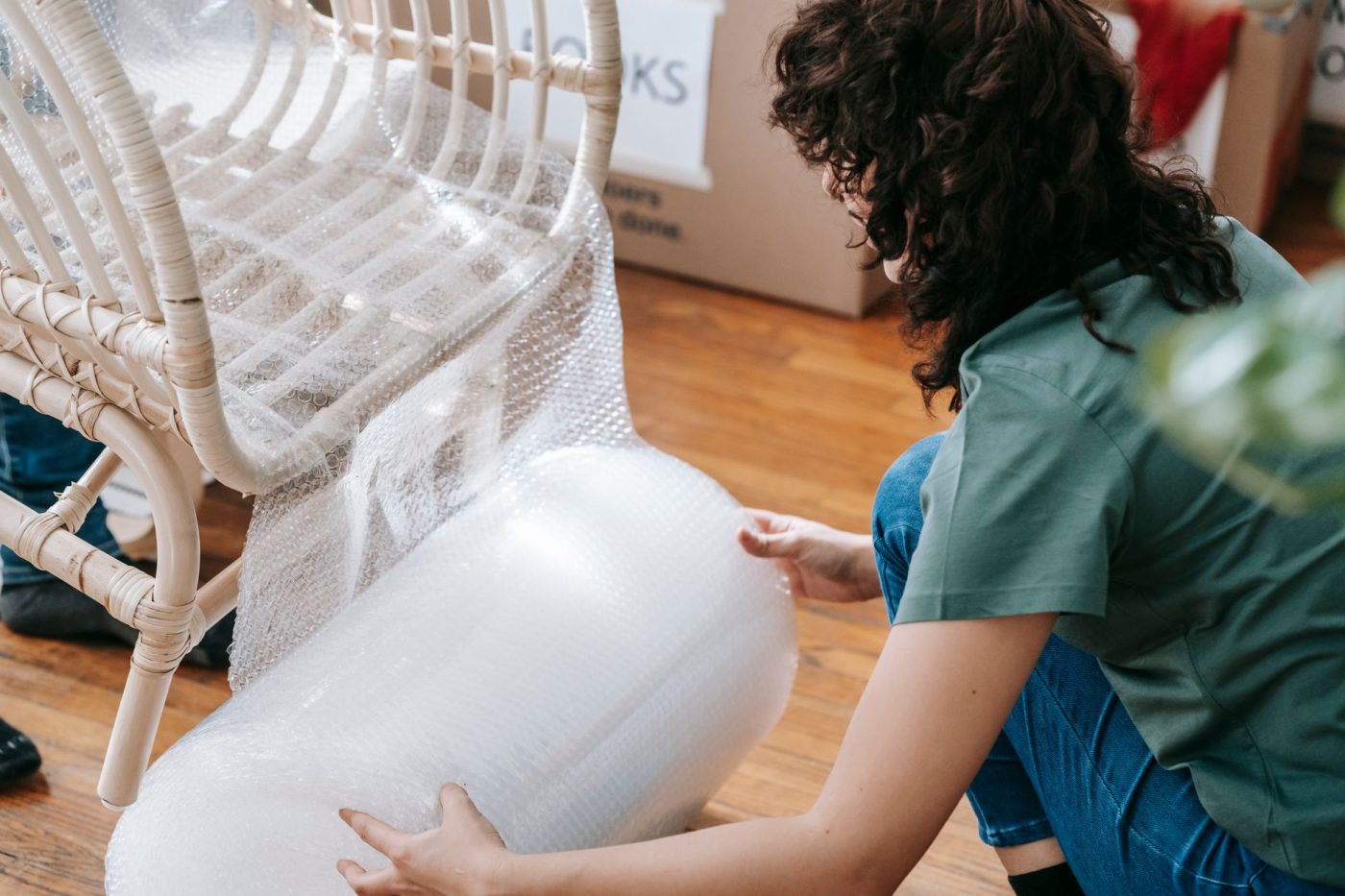
Photo: Blue Bird, Pexels (Pexels License)
What do I need before I start packing?
Gather the supplies first, so no painting has to lean against the wall while you hunt for tape. You need glassine or acid-free tissue, foam wrap or bubble wrap, rigid cardboard or foam board, picture corner protectors, low-tack painter's tape and a tape measure. Skip newspaper for anything you care about: fresh ink can transfer to a canvas or a print surface.
Then inspect each piece in good light. Check the frame joints, the hanging wire and the D-rings, and note any flaking paint, loose canvas or cracked glass. Photograph the front, the back, the frame corners and any existing damage, and keep those images with your moving inventory.
- Measure every painting, frame included, and write the numbers down.
- Remove hanging hardware that sticks out, and bag the screws and wire.
- Photograph each piece before packing for your insurance record.
- Set aside glassine, foam wrap, corner protectors and rigid board.
- Ask your insurer whether fine art needs a separate endorsement.
How do I pack a painting step by step?
Work from the surface outward, and let each layer settle before you add the next. Tape a sheet of glassine or acid-free paper over the face first, then fit foam or cardboard corner protectors so the frame edges never touch the box.
- Lay the painting face up on a clean padded surface and cover the surface with glassine, never plastic film.
- Slide foam corner caps onto all four frame corners and secure them with low-tack tape.
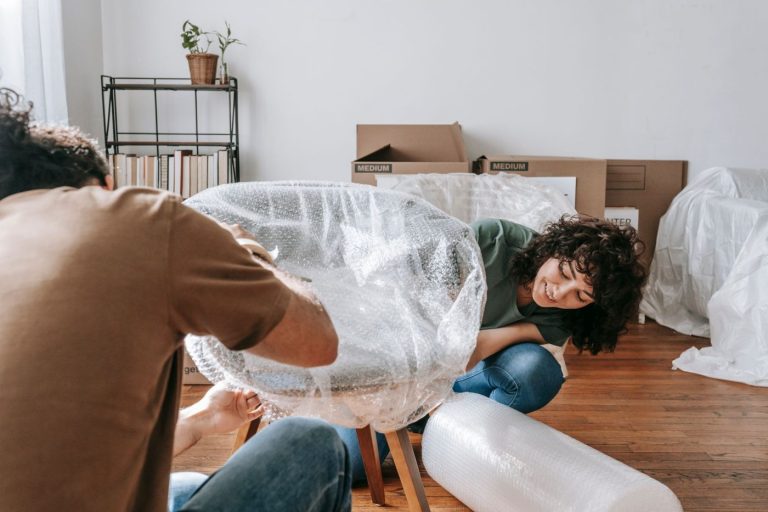
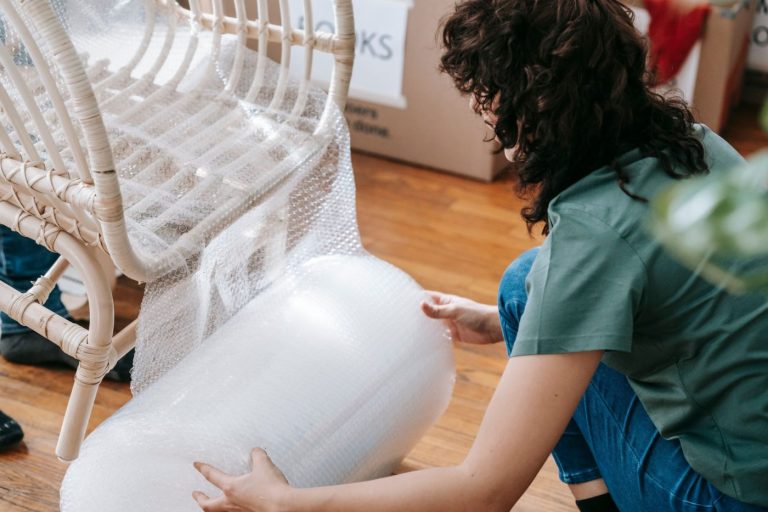
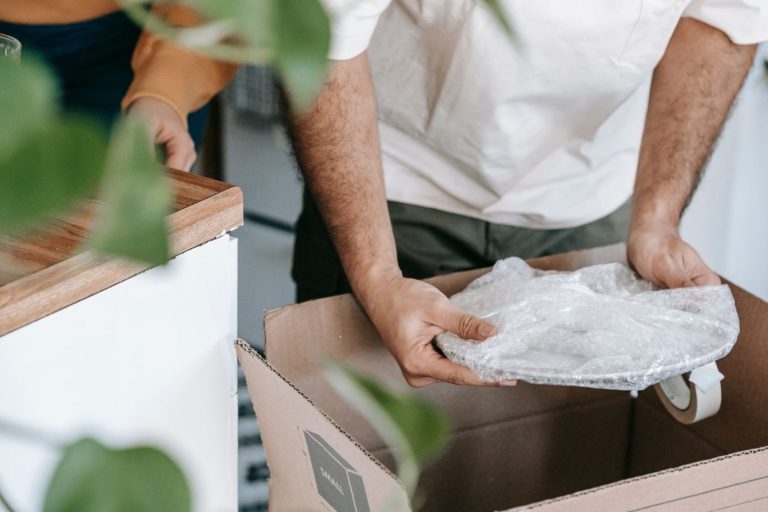
- Wrap the whole piece in two layers of bubble wrap, bubbles facing out, and tape the wrap to itself, not to the frame.
- Cut a cardboard box at least 2 in larger on every side, line it with foam board, and set the wrapped painting inside.
- Fill the gaps with crumpled paper so the painting cannot shift, then close and tape the seams.
- Label the front face and the top edge with arrows and the words "This side up" and "Fragile".
Should I use a crate or just a box?
A sturdy cardboard box with foam corner protectors is enough for a framed print or a poster under 24 by 36 inches travelling across town or to a nearby city. A wooden crate pays off for anything larger, for an unframed canvas, for work valued above a few thousand dollars, and for road trips over 500 miles.
Crates cost more and weigh more, so carriers charge accordingly. The extra cost pays off when a canvas cannot be replaced or when the route crosses several climate zones. Ask the mover to build the crate around the painting, not to squeeze the painting into a stock size.
- A box suits small framed pieces, short distances and lower value.
- A crate suits large canvases, high value and long-distance routes.
- Glass and delicate frames need rigid sides, which cardboard alone does not give.
- Reusable crates make sense if the artwork will move again.
How do I protect art from humidity and temperature swings?
Paintings tolerate slow change better than sudden swings. Conservators generally put the safe range at roughly 18-22 °C (65-72 °F) and 45-55% relative humidity, held as steady as the route allows. Canvas and wood panel expand and contract with moisture, so a single damp night in a cold truck can loosen paint layers that survived decades on a dry wall.
Wrap the painting in a moisture barrier before it goes into any vehicle. Acid-free glassine against the surface, then a layer of polyethylene sheeting taped shut on all sides, keeps ambient damp away from the canvas. Add a small packet of silica gel desiccant inside the barrier for long-distance runs, and never let the packet touch the painted surface directly.
- Avoid attics, garages and car trunks: they reach extreme heat by day and drop sharply at night.
- Keep the barrier sealed until the painting is inside the destination room, not on the porch.
- Let a cold painting sit wrapped for several hours before unwrapping it indoors.
- Never store artwork against an exterior wall or near a radiator.
Which transport should I choose for paintings?
Your own car suits short runs of 100-300 miles with a few framed pieces you can lay flat and cushion yourself. A rental van gives more room for a local or one-way move, but you drive, load and carry the liability. Shared loads cost less over long distances, yet your paintings ride with other freight and may sit in a warehouse during transfer.
A dedicated art shuttle moves paintings alone in a climate-controlled truck, with the crew handling crates and recording condition at pickup. It costs the most and has to be booked weeks ahead, but it is the usual choice for high-value work or moves over 1,000 miles.
- Own car: cheapest, best under 300 miles, you control handling.
- Rental van: good for one-way local moves, you carry full liability.
- Shared load: lower cost, longer transit, extra handling at hubs.
- Dedicated art shuttle: highest cost, direct route, climate control.
How do I choose and vet a mover for artwork?
Ask any mover you shortlist two questions before anything else: whether they handle fine art regularly, and what their valuation coverage actually pays if a canvas is punctured. Standard released value, the default on most household moves, usually works out to a few cents per pound, so a 20-pound painting brings back almost nothing. Full replacement valuation costs extra and should appear as a line item in the quote, not as a verbal promise.
Get the details in writing before the truck arrives. Ask each company these questions and keep the answers in your email thread:
- Will the crew wrap, pad and load the paintings themselves, or hand them to a third-party carrier?
- Is the truck climate-controlled, and does it run heating or cooling overnight in storage?
- Who inspects each piece at pickup, and does that person sign a condition report with photos?
- What is the deductible on the valuation coverage, and what exclusions apply to pre-existing damage?
- How are claims filed, and how many days do I have after delivery?
Treat a quote as a warning sign if it lumps artwork into a general "fragile items" line, refuses to put valuation terms in writing, or asks for a large cash deposit before an in-home survey. Confirm the USDOT and MC numbers on the Federal Motor Carrier Safety Administration site, and check that the address on the insurance certificate matches the company you hired.
What should I do when the paintings arrive?
Unpack in a dry, closed room and let each painting sit in its crate or box for 24-48 hours before you unwrap it. A canvas that travelled through cold air or a damp truck needs time to match the room, and opening it too early can pull condensation straight onto the surface.
Work from the outside in. Cut the tape away from the face, lift the painting out with both hands on the frame, and set it face up on a padded surface. Check the glass, the frame corners and the canvas edges under good light, then compare what you see with the photos you took before packing.
- Photograph the sealed crate and any crushed corners before you open anything.
- Note the delivery date, the time and the name of the person who handed over the items.
- Record each scratch, chip or loose stretcher bar in writing and in close-up shots.
- Report damage to the mover within the claim window stated in your contract, usually a few days.
FAQ
Can I roll a canvas painting to save space?
Only if the paint layer is stable and a conservator has approved it. Rolling puts stress on the ground and paint film and can cause cracking or flaking that shows up months later. For most paintings, keep the canvas on its stretcher and move it flat or upright.
Is bubble wrap safe for oil paintings?
Not directly against the surface. Bubble wrap can leave marks and trap moisture against the paint. Wrap the painting in acid-free tissue or glassine first, then add bubble wrap as the outer cushioning layer, and never let plastic touch the canvas.
How much does it cost to ship a painting?
The cost depends on size, crate type, distance and whether the load is shared or dedicated. Ask for a written quote that lists packing, crating, transport and valuation coverage separately, and compare at least two quotes before you commit.
What if the painting is damaged in transit?
Photograph the packaging before you open it and the damage as soon as you see it. Report the damage to the mover in writing within the claim window stated in your contract, and keep the crate and packing materials until the claim is settled.
About the Author