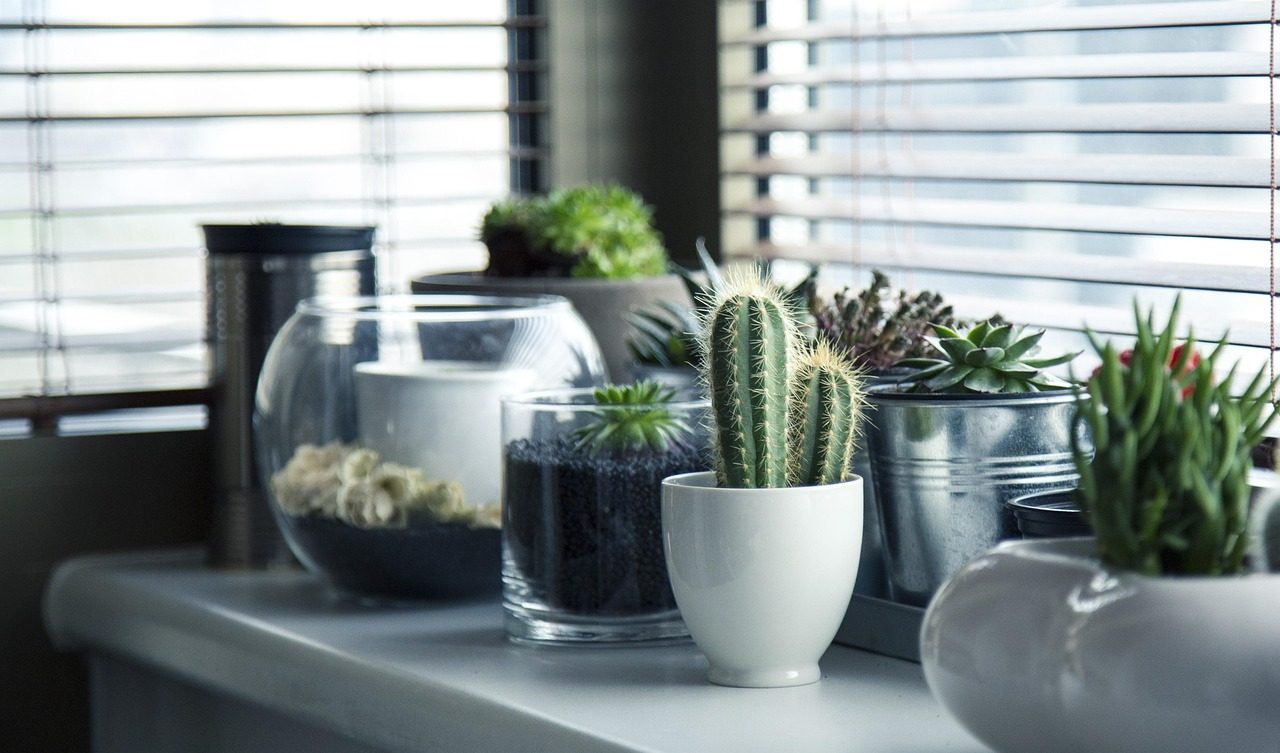
Photo: milivigerova, Pixabay (Pixabay Content License)
Which plants should I take and which should I leave?
Start by sorting your collection into three groups: healthy favorites you will definitely take, plants that are too large or sick to be worth the trouble, and a middle group you can give away to friends or neighbors. The distance of your move is the most practical filter. For a cross-town relocation you can safely bring almost any healthy houseplant, but a multiday cross-border trip exposes them to temperature swings and darkness that weaker specimens will not survive.
Large outdoor trees and shrubs planted in the ground are almost always better left behind. Digging them up damages the root system, and mature plants rarely re-establish well in a new landscape. Indoor trees over six feet tall, such as fiddle-leaf figs or mature dracaenas, also pose a problem: they are awkward to pack, need a dedicated upright space in the truck, and can snap during transit. Measure the doorway and ceiling height of your new home before you commit to moving a tall plant.
Sentimental value matters, but be honest about condition. A plant that is already struggling with pests, root rot, or leaf drop is unlikely to handle the stress of moving. Quarantine and treat any plant you plan to bring, and discard or gift the ones that are not thriving. If you can carry the pot with one hand and the plant has put out new growth in the last month, it is a strong candidate for the move.
How do I prune and prep plants three weeks before the move?
Begin prepping plants three weeks ahead. This gives them time to heal from pruning and settle into new pots before being packed. Remove dead weight, switch to safer containers, and make sure you do not move pests to your new home.
Begin by pruning away dead, yellowing, or damaged leaves and stems with clean shears. For leggy plants, you can trim back up to a third of the growth to make them more compact and easier to handle. Water the plants lightly a few days before the move so the soil is moist but not wet; soggy roots freeze more easily in winter and promote fungal growth in a dark truck. Never water on the morning of the move, as leaking soil makes a mess and weakens cardboard boxes.
Repot any plant still in a heavy ceramic or terracotta container into a shatterproof plastic pot of the same size. Check the leaves, stems, and soil surface for pests like spider mites, scale, or fungus gnats. Treat any infestation now with insecticidal soap and isolate that plant so the problem does not spread during transit.
- Prune dead and damaged foliage three weeks out to allow cuts to callus over.
- Trim back up to a third of the growth on large or leggy plants for easier packing.
- Repot from breakable ceramic into shatterproof plastic pots of the same diameter.
- Inspect both sides of leaves and the top inch of soil for pests and treat immediately.
- Water lightly two or three days before the move, aiming for damp but not wet soil.
- Skip the final watering on moving day to avoid leaks and soggy roots in transit.
What is the safest way to pack plants for a local move?
For a local move, the goal is to keep pots upright and prevent branches from snapping during a short car or truck ride. Open-top boxes let leaves breathe while the sides block bumps from neighboring items. Choose a sturdy cardboard box tall enough to cover three-quarters of the pot height without pressing on the foliage.
Stabilize pots inside the box to prevent tipping on turns and stops:
- Line the bottom of the box with a layer of crumpled packing paper to absorb vibrations.
- Place the heaviest pots in the center and lighter ones toward the edges, leaving two inches between pots.
- Stuff crumpled paper or foam scraps tightly between pots so nothing can shift sideways.
- Slide a cardboard divider between plants with spreading leaves to keep branches separate.
- Poke a few air holes in the box sides if the drive will last more than an hour.
- Load the box last into the vehicle, on a flat floor or seat, never stacked under other boxes.
Water plants lightly the day before the move so the soil is damp but not soggy, which helps the root ball hold together. In cold weather, wrap the outside of the box with a blanket for the walk between the house and the car, then remove it once the heat is on.
What do I need for a long-distance move or shipping plants?
Plants moving more than a day away need a closed environment that holds moisture without rotting the roots. Wrap the root ball in damp sphagnum moss, then secure it with a breathable plastic bag tied around the stem. The moss releases water slowly over 48-72 hours and keeps the roots from drying out in a hot vehicle or cargo hold.
In winter, add a 40-hour heat pack taped to the inside of the box lid, never directly against the foliage. For summer moves, crack one corner of the box and avoid black plastic that can turn the package into an oven. Most interstate moving companies will not insure plants because live goods are excluded from the carrier’s liability. If the collection is valuable, ship it separately through a specialty plant courier that offers temperature-controlled transport and declared-value protection.
- Damp sphagnum moss for each root ball
- Breathable poly bags with a stem tie
- 40-hour heat packs for cold weather
- Double-wall corrugated boxes with vent holes
- Bamboo stakes to prevent crushing
- A printed plant inventory for the receiving end
Are there legal restrictions on moving plants across state or provincial borders?
Yes, several states and provinces enforce strict agricultural regulations to prevent the spread of pests and diseases. California, Florida, and Arizona operate permanent border inspection stations where vehicles may be stopped and houseplants examined. Bringing untreated citrus plants, fresh soil, or outdoor potted plants into these states can result in fines or confiscation. The rules apply even to a single philodendron on the back seat of a moving truck.
The Canadian Food Inspection Agency regulates plants at the federal level. A household mover can generally carry houseplants as personal effects, but they must be free of soil, pests, and disease symptoms. Certain species, including potato plants and some ornamentals, require a phytosanitary certificate or are prohibited entirely. Bare-root plants with washed roots packed in sterile material clear inspection faster than plants in potting mix.
Check the destination rules two weeks before the move. The USDA Animal and Plant Health Inspection Service maintains a state-by-state summary of plant import requirements, and the CFIA website lists regulated species and soil restrictions for each province. A call to the destination state's department of agriculture confirms whether your specific plants need a certificate or are better left behind.
How do I help plants recover after the move?
Unpack your plants as soon as you arrive. Remove all wrapping and open the boxes to let them breathe. Place each plant in a spot with bright, indirect light and keep it away from direct sun for the first week. Even a plant that thrived in a sunny window before the move needs time to readjust, and direct rays will stress the leaves further.
Hold off on fertilizer for at least a month. The roots have been jostled and the plant needs to settle, not push out new growth. Expect some yellowing or dropping leaves during the first two weeks; this is a normal stress response, not a sign the plant is dying.
Transplant shock appears as wilting, leaf curl, or sudden leaf drop even when the soil is moist. Water only when the top inch of soil feels dry, and do not repot for at least three weeks. A plant recovering from a move needs stability.
- Unpack plants immediately and remove all wrapping material.
- Set them in bright, indirect light away from direct sun for the first week.
- Do not fertilize for at least four weeks after the move.
- Expect some leaf yellowing or dropping; this is a normal stress reaction.
- Water only when the top inch of soil is dry to the touch.
- Delay repotting for a minimum of three weeks to let roots settle.
FAQ
Can moving trucks transport live plants?
Most long-distance moving companies will not load live plants. The cargo hold lacks light and climate control, and plants can attract pests. Local movers often agree to carry a few well-packed plants, but they usually won't insure them. Always confirm with your mover before loading day.
How long can a houseplant survive in a dark box?
Most hardy houseplants, such as snake plants and pothos, can handle 48-72 hours in a dark box if the soil is barely moist. Delicate tropicals like calatheas may show stress after 24 hours. If the move takes longer, open the boxes in indirect light overnight and let the plants breathe before sealing them again.
What temperature is too cold or too hot for plants during a move?
Most houseplants suffer damage below 45°F (7°C) and above 90°F (32°C). In winter, wrap pots in newspaper and use a heat pack if the plant will be outside for more than a few minutes. In summer, never leave a plant in a parked car; the interior can hit 120°F in under an hour.
Should I repot my plants right after the move?
No. Plants need time to adjust to new light and humidity levels. Wait at least two to three weeks before repotting, even if the pot cracked during transit. Repotting immediately adds stress and can cause root rot if the plant is already in shock.
About the Author