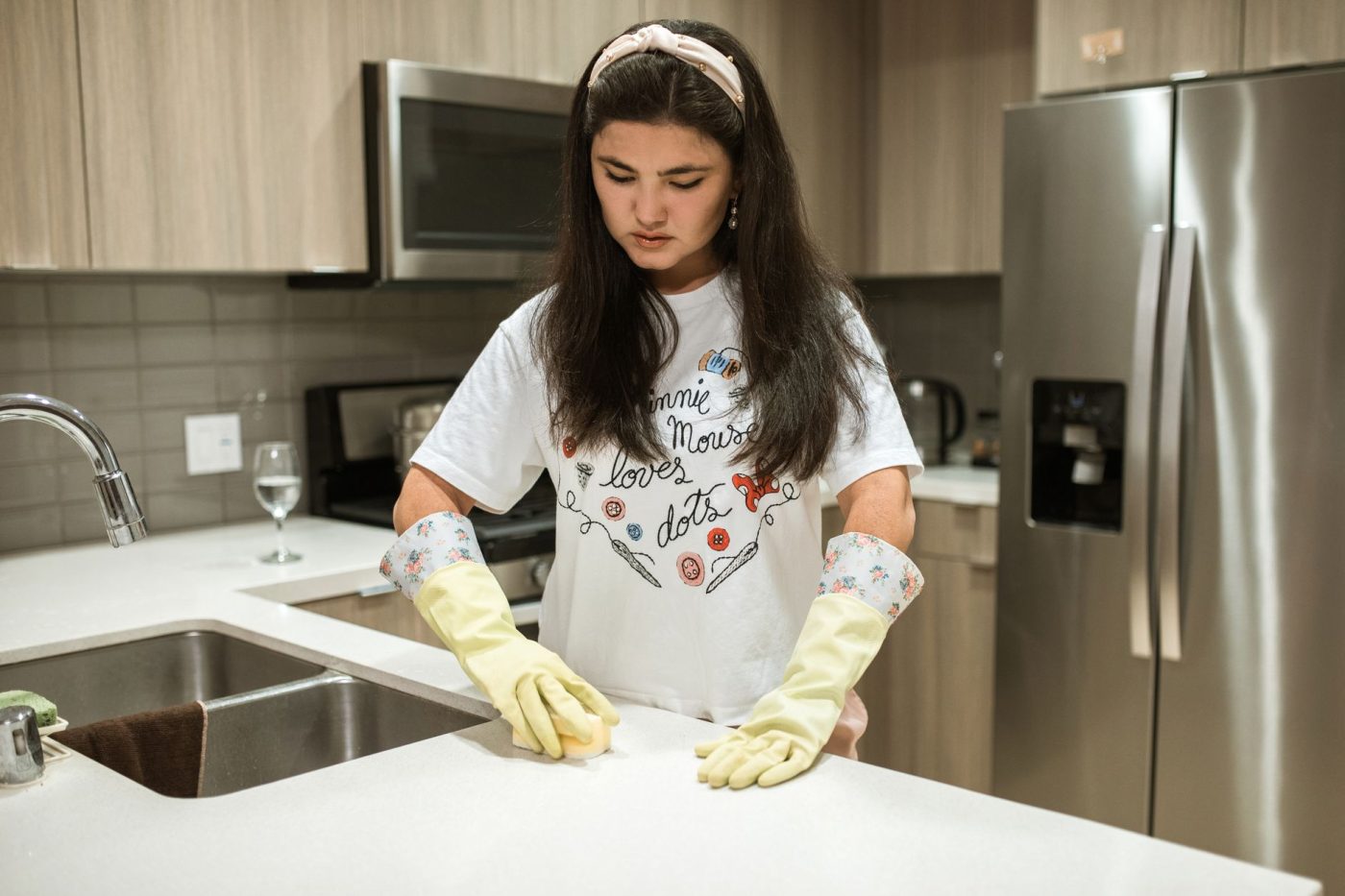
Photo: RDNE Stock project, Pexels (Pexels License)
What does a standard move-out clean include?
A standard move-out clean means returning the property to the condition it was in when you moved in, minus normal wear and tear. The scope covers every surface in every room, from ceiling corners to baseboards, and typically extends to the inside of appliances, cabinets, closets and light fixtures. Your lease or sale agreement will state the exact standard, and many landlords in the US and Canada attach a detailed cleaning checklist to the lease.
The work goes well beyond a weekly tidy-up. You will need to pull out the refrigerator and stove to clean behind and underneath them, wash the interior of the oven and microwave, descale bathroom fixtures, wipe down all doors and door frames, and clean inside every drawer and shelf. Walls and baseboards often need spot-cleaning or a full wipe-down, especially in kitchens and hallways. People often overlook window tracks, blinds and ceiling fan blades.
If you have lived in the home for several years, expect the job to take a full day or a weekend. Start early and work room by room so you do not miss the hidden spots property managers and home inspectors routinely check.
Kitchen cleaning checklist
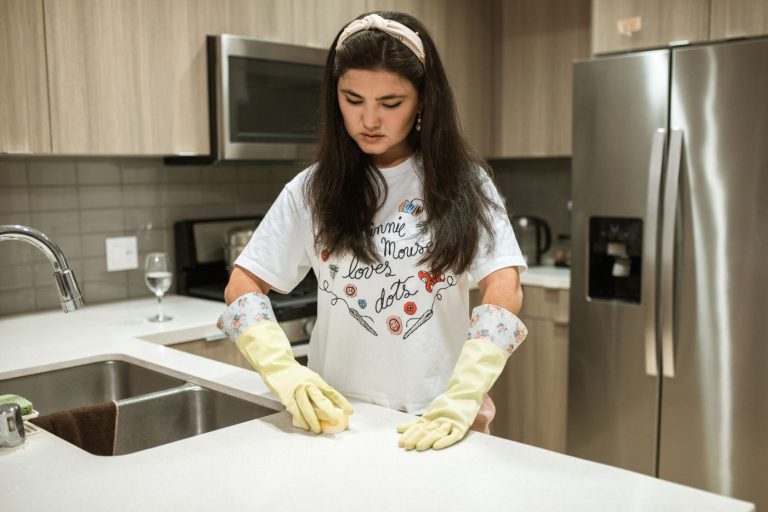
The kitchen often takes the longest during a move-out clean because grease, food residue, and hard water spots build up in places you do not scrub every week. Start with the appliances that generate the most questions from landlords and buyers, then work outward to surfaces and storage.
Set aside at least three hours for an average kitchen. Remove everything from cabinets, drawers, the fridge, and the freezer before you begin, so you are not cleaning around items or leaving crumbs behind.
- Degrease the oven interior, racks, and glass door with a dedicated oven cleaner or a baking soda paste left overnight. Wipe the range hood, filter, and exterior, removing the filter and soaking it in hot soapy water if it is reusable.
- Empty the fridge and freezer completely, turn them off, and let them come to room temperature. Wash all removable shelves and bins in the sink, then wipe down every interior surface with a mild cleaner, paying attention to door seals where mold can hide.
- Wipe cabinet shelves, drawer bottoms, and the interior and exterior of all doors with a degreasing solution. Do not skip the top edges of wall cabinets where a fine layer of kitchen grease settles over time.
- Scrub the sink basin, faucet, and drain area with a non-abrasive cleaner to remove hard water stains and soap scum. If the sink has a garbage disposal, run ice cubes and lemon peels through it to clear any odor.
- Clean countertops and the backsplash with a product safe for the material, whether it is laminate, granite, or tile. Move small appliances to clean underneath them, and wipe the appliance cords and bodies before packing them away.
- Finish by sweeping and mopping the floor, getting into the corners and the toe-kick space beneath the lower cabinets where debris collects.
Take photos of the cleaned appliances and cabinets before you close the kitchen door for the last time. Those images are your record if a deposit dispute comes up later.
Bathroom cleaning checklist
A bathroom that looks clean at a glance can still fail a final inspection if corners are missed. Work from top to bottom so any dust or cleaner drips land on surfaces you have not yet wiped, and let descaling products sit for the few minutes the label recommends before scrubbing.
Hard-water spots on chrome and glass often lead to deposit deductions, so this room takes longer than you expect. Start the exhaust fan and open a window if you have one. The ventilation helps products work and keeps the air clear while you clean.
- Scrub the tub and shower surround with a non-abrasive cleaner, paying attention to the corners where soap scum builds up. Rinse thoroughly and dry the walls with a microfiber cloth to prevent new water spots.
- Clean glass shower doors with a dedicated glass cleaner or a white vinegar solution. Wipe the door tracks and seals with an old toothbrush to remove mildew and trapped grime.
- Disinfect the toilet inside and out, including the base, the floor bolts, the seat hinges, and the area behind the bowl where dust and hair collect.
- Wipe the vanity counter, sink basin, and faucet with a descaling cleaner. Polish the mirror with a lint-free cloth and check the edges of the frame for toothpaste splatter.
- Remove the exhaust fan cover and wash it in warm soapy water. Vacuum the fan housing gently with a brush attachment, then dry the cover completely before snapping it back into place.
Living areas and bedrooms checklist
Landlords and new buyers notice dust and forgotten corners in living spaces and bedrooms during a walkthrough. Start high and work your way down so any debris that falls lands on a floor you have not cleaned yet.
- Dust ceiling fan blades, light fixtures, and the tops of door frames and tall furniture with a microfiber cloth or an extendable duster.
- Wipe all baseboards with a damp cloth, paying attention to the groove where the board meets the floor.
- Clean door panels, door frames, and switch plates with a mild all-purpose cleaner to remove fingerprints and smudges.
- Vacuum carpets in two directions, using the crevice tool along the edges; for hard floors, sweep first, then mop with a cleaner safe for the material.
- Wash windowsills and the tracks where sliding windows sit, removing dead insects and built-up grit.
After the deep clean, open the windows for half an hour to air out the rooms. Walk through each space with the lights on and look at surfaces from a low angle. Do not hide scuffs on a wall behind a sofa; it is not worth the deduction from your security deposit.
What landlords and buyers actually check
Landlords and home buyers focus on the spots that show whether a property was genuinely maintained or just given a quick surface wipe. A baked-on greasy oven interior is the single most common reason for a security deposit deduction. Pull the racks out and use a dedicated oven cleaner a day before the final inspection so the fumes have time to dissipate.
Another telltale area is behind the refrigerator. Inspectors slide it out a few inches to check for accumulated dust, food debris and forgotten items. Window tracks collect dead insects and grime visible from across the room, so vacuum them with a crevice tool and wipe them dry. Pink or black bathroom grout signals neglect and can cost you a cleaning fee even if the rest of the room is spotless.
Inspectors look closely at floors and walls under natural light. Inspectors check for scuff marks on baseboards, unfilled nail holes and carpet stains a vacuum cannot hide. Walk each room with the blinds open and a flashlight aimed low across the floor. The low angle reveals dust bunnies, pet hair along the edges and scratches needing attention before the final walkthrough.
Should you hire a move-out cleaning service?
Whether you clean yourself or hire a service depends on your lease terms, your time, and the condition of the property. Some landlords in the US and Canada write a professional cleaning clause into the lease, meaning you must provide a receipt from a licensed cleaner before the security deposit is released. If your lease says nothing about it, the choice is yours.
Doing it yourself saves the direct cost but costs you a full day or more, especially with a larger home. You also need to own or rent the right equipment: a heavy-duty vacuum, a steam mop, extension dusters, grout brushes, and cleaning solutions for stainless steel, glass, and tile. A professional team arrives with all of that, finishes in a few hours, and often guarantees their work with a callback window if something is missed during the final walkthrough.
Common reasons to hire pros include:
- The lease requires a professional cleaning receipt.
- You are moving long-distance and cannot return to clean after the truck leaves.
- The home has stubborn stains, pet odors, or mold that need commercial-grade treatment.
- You are selling the home and staging requires a spotless, photo-ready finish.
- Your schedule simply does not allow a full day of cleaning between packing and closing.
FAQ
How long does a full move-out clean take?
For a two-bedroom apartment, a thorough solo clean typically takes 4 to 6 hours. A larger home or one with neglected appliances can take a full day. Hiring a crew cuts the time to 2 to 3 hours.
Do I have to clean the carpets professionally?
Many lease agreements in the US and Canada require professional carpet cleaning and ask for a receipt. Check your lease. Even if it is not required, deep stains can lead to deductions from your deposit.
What happens if the place is not clean enough?
The landlord or buyer can deduct the cost of a professional cleaning from your security deposit or hold back funds at closing. The amount is usually based on actual invoices from a cleaning company.
Can I just do a regular weekly clean instead?
No. A move-out clean is a deep clean that reaches areas skipped in weekly tidying, such as behind appliances, inside the oven, baseboards, and window tracks. A surface wipe-down will not pass a final inspection.
About the Author