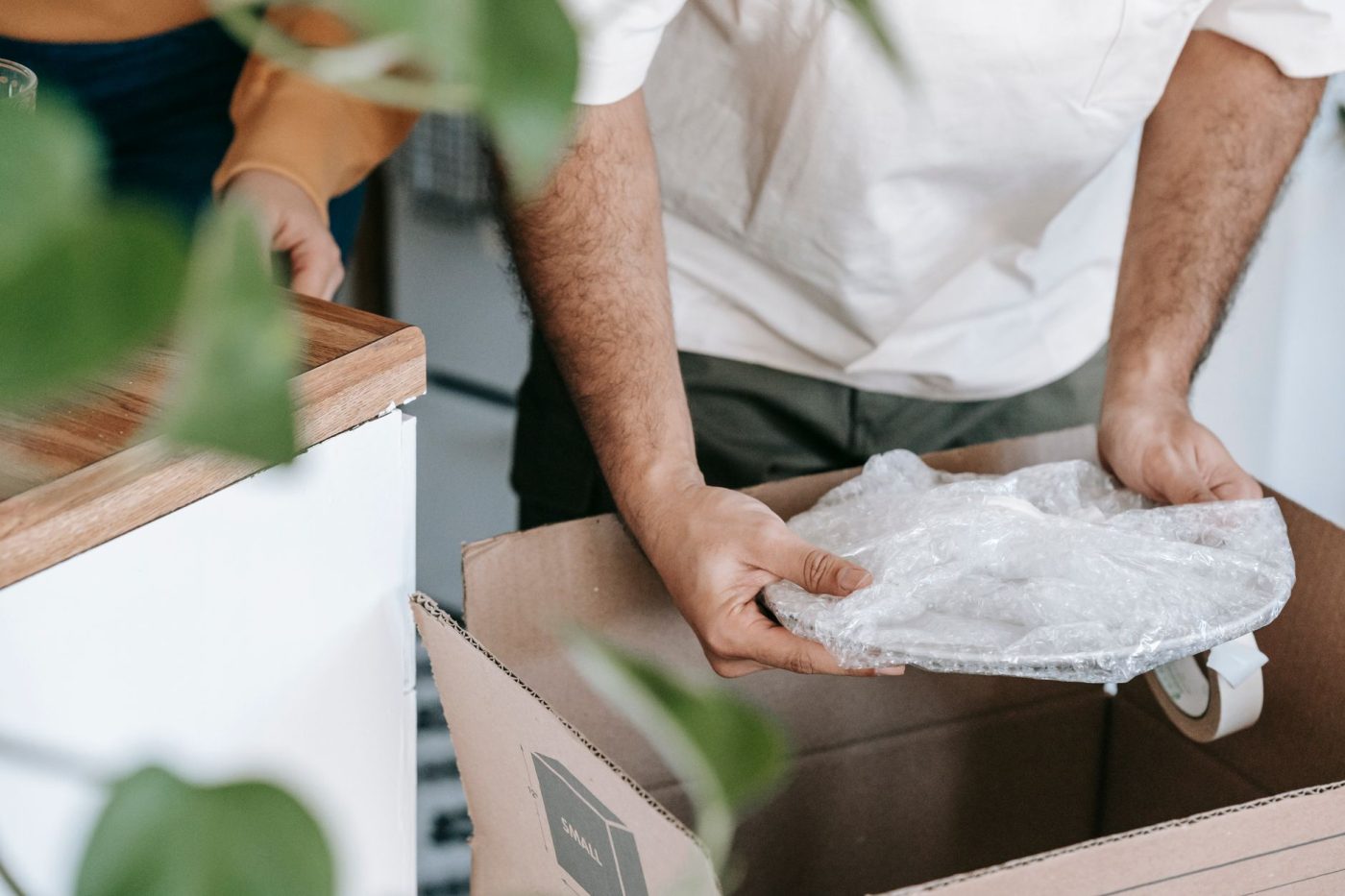
Photo: Blue Bird, Pexels (Pexels License)
What types of moving boxes do I actually need?
A standard small box (1.5 cubic feet) holds up to 60 pounds and suits dense items like books, tools and canned goods. Medium boxes (3.0 cubic feet) carry up to 50 pounds and work well for kitchenware, toys and folded clothing. Large boxes (4.5 cubic feet) are rated for lighter loads of 30 to 40 pounds, so they are ideal for bedding, pillows and lamp shades. Heavy-duty double-wall boxes support 80 to 100 pounds and protect fragile or weighty contents such as dishes and small appliances.
Wardrobe boxes stand 24 inches wide and include a metal hanging bar, letting you transfer suits, dresses and coats straight from the closet without folding. Dish pack boxes use a double-layer construction with scored inner flaps that cradle plates on edge, reducing breakage. Flat screen TV boxes and mirror cartons are telescoping styles that adjust to the depth of the item and include foam corner blocks. Matching the box rating to the load keeps stacks stable in the truck and prevents bottom blowouts during a move.
- Small box (1.5 cu ft): 60 lb limit, best for books and heavy tools.
- Medium box (3.0 cu ft): 50 lb limit, suited to pots, pans and pantry items.
- Large box (4.5 cu ft): 40 lb limit, ideal for bulky light items like comforters.
- Heavy-duty double-wall box: 80-100 lb limit, built for dishes and small appliances.
- Wardrobe box: hanging garments, no weight rating printed but keep under 50 lb.
- Dish pack and specialty boxes: scored interiors or foam blocks for glassware, plates and flat screens.
Which packing paper or filler works best for dishes and glassware?
Plain packing paper is the workhorse for dishes and glassware. Use unprinted, clean newsprint paper for wrapping each plate, bowl and glass individually before placing them in a box. Two or three sheets per item create a cushion that prevents surface scratches and absorbs minor bumps. Paper also fills the empty spaces between wrapped items inside the box, so nothing shifts during transit.
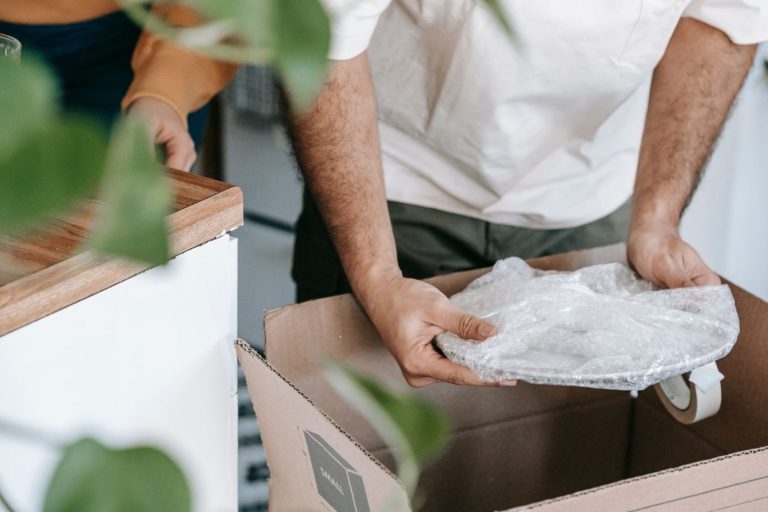
Bubble wrap protects your most fragile pieces. Wrap stemware, porcelain figurines and thin decorative items in a single layer of small-bubble wrap with the bubbles facing inward, then secure with tape. Foam sheets, often sold as dish packs, slide between stacked plates to separate them without adding bulk. Place a foam sheet, then a wrapped plate, then another foam sheet, and repeat until the stack fills a dish barrel box.
Never use printed newspaper for direct contact with dishes and glassware because the ink transfers onto surfaces and is difficult to remove. Avoid overstuffing boxes with filler at the expense of proper individual wrapping. A well-packed box of glassware has no empty voids but still allows the flaps to close without bulging. When you lift the sealed box, nothing inside should rattle or shift.
How do I choose the right packing tape?
Moving tape uses a hot-melt adhesive that bonds instantly to cardboard and holds under shifting weight. Acrylic tape is cheaper but needs firm pressure and warmer air to stick, so it is unreliable in a cold truck or a rushed packing session. Masking tape peels under light tension and duct tape leaves a gummy residue that ruins box flaps, so neither belongs on a moving box.
A 2-inch width and a thickness of 2.5 to 3 mil give you enough coverage without wasting material. For boxes heavier than 40 pounds, switch to a 3-inch tape or a reinforced water-activated tape that fuses with the cardboard fibers. Clear tape works fine for most loads, but brown tape hides labels and markings less, which can matter when you stack boxes in storage.
Buy a tape dispenser with an adjustable brake. It speeds up the job and keeps your cuts clean, so you use less tape. For a typical two-bedroom home, two rolls of 110-yard moving tape will cover all your boxes with some left over for last-minute reinforcement.
What is the most reliable way to pack electronics and large appliances?
Original packaging with its custom foam inserts protects TVs, monitors and computers best. If you no longer have the box, wrap the screen first in a layer of soft, lint-free material, then in anti-static bubble wrap designed for electronics. Standard bubble wrap can generate static electricity that damages circuit boards, so look for the pink or clear wrap labeled anti-static.
For large kitchen appliances like refrigerators and washing machines, secure all loose internal parts with tape and defrost the freezer at least 24 hours before moving day. Wrap the exterior in moving blankets and hold them in place with packing tape or rubber straps, never directly against the finish. Once the appliance is loaded, strap it upright against the truck wall so it cannot shift during transport.
Are plastic bins better than cardboard boxes?
Plastic bins and cardboard boxes each have a place in a move, and the right choice depends on distance and what you are packing. For a local move under 50 miles, heavy duty plastic totes with locking lids offer excellent protection against a sudden rain shower and resist crushing when stacked four or five high in the truck. They also eliminate the need to buy tape, although you will pay $8 to $15 per tote upfront compared with $2 to $4 for a new double wall cardboard box of similar volume.
On a long distance or cross border move, cardboard typically comes out ahead. Plastic bins are rigid and do not collapse when empty, which means you pay to ship air on the return trip or find yourself stuck with a stack of totes at the new house. Cardboard boxes can be broken down and recycled, and a quality double wall box holds up fine when packed correctly and sealed with a strong tape. The stackability advantage of plastic also fades on a long haul if the bins lack interlocking lids, because a shifting load can still topple a tower of smooth-sided containers.
Rental plastic bins make sense when you want durability without the long term storage headache. You book a delivery, pack over a week or two, and the company picks up the empties at your new address. The service works best for short distance moves in metro areas where the provider operates. Compare the rental fee, which often runs by the week, against the total cost of buying cardboard, tape, and your time assembling and later breaking down boxes.
- Plastic bins lock out moisture and pests better than cardboard, making them a safer shell for fabric, books, and paper files during a move that involves a storage unit stop.
- Cardboard boxes are lighter, so a stack of five loaded wardrobe boxes weighs less than the same stack in rigid plastic, which matters for weight limits on rental trucks.
- Rental bins come in standardized sizes that fit hand trucks precisely, cutting load time on a local move by 20 to 30 minutes.
- If you move often, owning a set of matching heavy duty totes pays off after two or three relocations compared with buying new cardboard each time.
- Cardboard is biodegradable and widely accepted in curbside recycling, while broken plastic bins usually end up in the trash unless your area has a specialty recycling program.
Where can I get quality packing supplies without overspending?
Moving companies sell box kits sized for standard rooms and include the right mix of small, medium and large cartons, which cuts waste and saves you a second trip to the store. Their prices are often 10-20% above wholesale, but you get single-wall or double-wall board rated for the job and no guesswork.
Hardware stores and home centers stock boxes by the piece and carry wide packing tape, plain newsprint and bubble wrap in bulk rolls. The trade-off is that you have to count and sort yourself, and the selection of specialty cartons, such as wardrobe boxes or dish packs with cell dividers, is thinner than what a mover supplies.
Online retailers offer multi-pack bundles and next-day delivery, which works well if you plan ahead and can compare the board grade in the listing. Watch for thin recycled board sold as heavy-duty; look for an ECT rating of 32 or higher and a gross weight limit printed on the bottom flap.
- Free from local stores. Liquor stores, bookshops and grocery chains often give away sturdy boxes with lids, but inspect for grease, mold or crushed corners before loading them.
- Community giveaways. Neighbors who just moved often list used boxes on Nextdoor or Facebook Marketplace for free, though you need to check that the boxes are dry, clean and still rigid.
- Rentable plastic crates. Some moving services and specialty rental firms drop off stackable HDPE crates and pick them up after you unpack, eliminating tape and assembly time.
- Buy-back programs. A few moving companies and online sellers will buy back clean, undamaged boxes you return within 30 days, cutting the net cost roughly in half.
How many boxes and how much tape should I buy for a typical home?
A standard 2-bedroom apartment of about 900-1,100 square feet typically needs 35-45 boxes in mixed sizes, plus 4-6 rolls of packing tape. A 3-bedroom house of 1,400-1,800 square feet usually fills 55-75 boxes and 7-10 rolls of tape. The exact count depends on how much you declutter before packing.
Count one roll of 2-inch tape for every 8-10 boxes. A 60-yard roll covers roughly 15-18 medium boxes if you use the standard three-strip method: one strip across the bottom seam, one across the top, and a third strip along each side seam for reinforcement. Heavy boxes holding books or kitchenware benefit from a fourth strip wrapped around the girth, which eats into your tape supply faster.
Break the estimate room by room and you will hit a closer number. A kitchen with standard cabinets often fills 8-12 medium boxes. A master bedroom with two closets runs 10-14 boxes, mostly medium and large. A living room with bookshelves and electronics adds another 8-12 boxes. Bathrooms and hall closets together rarely exceed 3-5 small boxes. Use this list as a starting count, then add 10 percent for last-minute items.
- Studio or 1-bedroom (500-700 sq ft): 20-30 boxes, 3-4 rolls of tape
- 2-bedroom apartment (900-1,100 sq ft): 35-45 boxes, 4-6 rolls of tape
- 3-bedroom house (1,400-1,800 sq ft): 55-75 boxes, 7-10 rolls of tape
- 4-bedroom house (2,000-2,400 sq ft): 80-100 boxes, 10-13 rolls of tape
- 5-bedroom house (2,800+ sq ft): 110-140 boxes, 14-18 rolls of tape
FAQ
Can I use old newspaper instead of packing paper?
Yes, but only for items that will not be stained by ink. Crumpled newspaper works as a filler inside boxes, but wrap dishes and white fabrics in plain packing paper to avoid smudges that are hard to remove.
Is one layer of bubble wrap enough for plates?
One layer is usually enough if you wrap each plate individually and stack them vertically with cushioning between every few plates. For heirloom or very thin china, a second layer or a foam pouch adds worthwhile protection.
Do I need specialty boxes for a flat-screen TV?
A specialty TV box with foam corners gives the best protection, especially for screens over 50 inches. If you kept the original box and foam inserts, that is the next best option. Wrapping a TV in blankets alone risks pressure damage in transit.
How do I tell good packing tape from cheap tape?
Good tape feels thicker and makes a sharp, consistent sound when pulled off the roll. Look for a hot-melt adhesive and a thickness of at least 1.8 mil. Cheap acrylic tape often peels in cold or humid weather and may let boxes open during a move.
About the Author