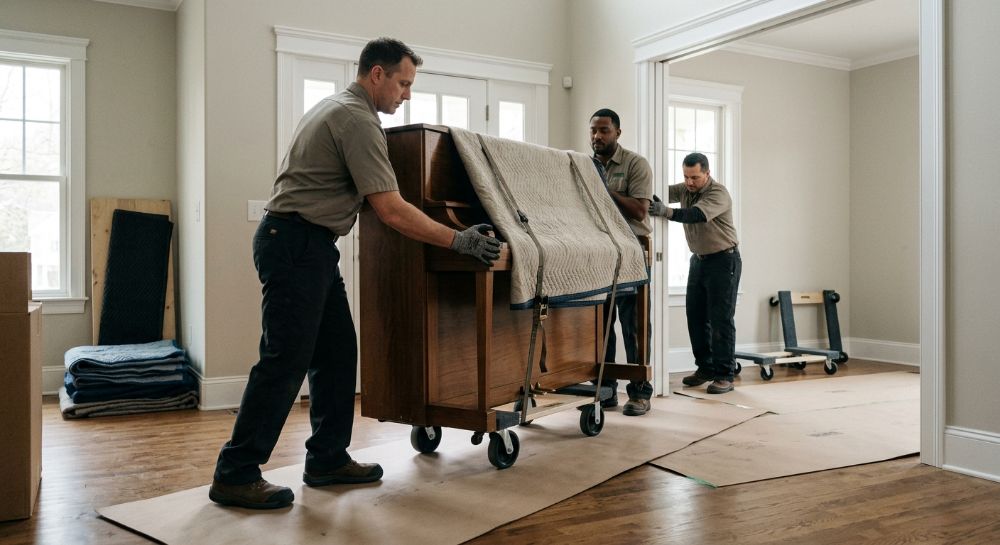
Moving a piano is nothing like moving standard household furniture. Pianos are dense, top-heavy, unevenly weighted, and notoriously fragile. Attempting to roll a 600-pound upright or a 900-pound grand on its own legs or a cheap hardware store cart is a fast way to damage floors, break the instrument, or cause severe injury.
Using the right piano-rated dolly or skid board distributes the weight evenly, secures the instrument, and protects your property. Here is a breakdown of the primary types of piano moving equipment and how to use them safely.
Types of Piano Dollies
Choosing the right equipment depends entirely on the design and size of your piano.
1. Standard Four-Wheel Furniture Dolly
A flat wooden or steel frame mounted on four heavy-duty swivel casters.
- Best for: Small uprights, spinets, and console pianos moving across flat, single-level surfaces.
- Key Features: Hardwood construction, non-marking rubber wheels, and thick rubber or carpeted padding to protect the piano’s wood finish.
- Weight Capacity: Typically 800 to 1,000 lbs.
2. Heavy-Duty Piano Dolly
Designed specifically for high-mass loads, featuring a reinforced box frame and wider wheelbase.
- Best for: Large full-size uprights, studio pianos, and heavy digital consoles.
- Key Features: Steel or reinforced oak frame, solid rubber or pneumatic wheels, and integrated tie-down points for ratchet straps.
- Weight Capacity: Usually 1,200 to 1,800 lbs.
3. Grand Piano Skid Board (Piano Board)
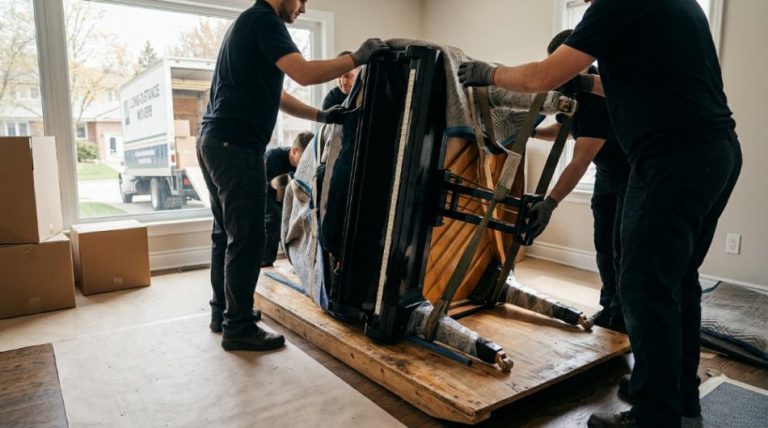
Grand pianos cannot roll upright on their legs. Instead, they are tilted onto their flat side and strapped to a heavy wooden board.
- Best for: Baby grands, parlor grands, and full concert grands.
- Key Features: Dense foam padding along the face, reinforced wooden spine, and integrated E-track slots for heavy tie-down straps.
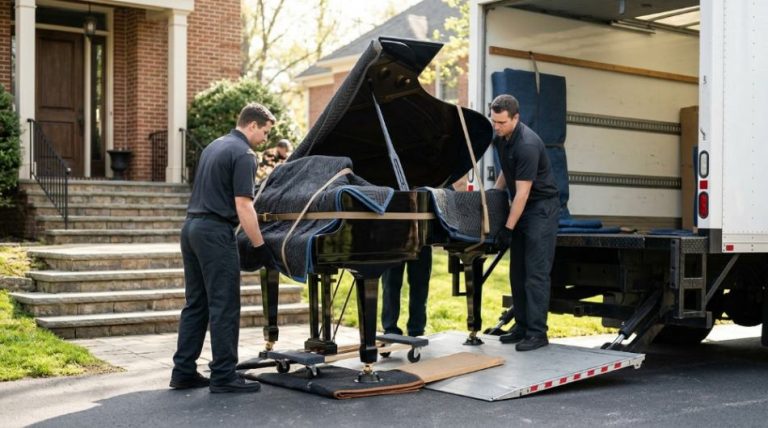
- How It Works: The piano body is strapped down securely to the skid board. The entire board is then lifted onto a four-wheel dolly to roll.
4. Stair-Climbing Dollies
Standard four-wheel dollies should never be used on stairs. Stair-climbing units use tracked treads or a rotating three-wheel mechanism to handle incline steps.
- Best for: Navigating upright pianos up or down exterior steps or stairwells.
- Key Features: Manual tread-brakes or motorized climbing tracks.
- Note: Motorized stair-climbers are standard equipment for professional movers. Manual stair dollies require immense physical strength and experience.
Equipment Comparison
| Equipment Type | Suitable For | Weight Rating | Key Advantage |
| Standard Furniture Dolly | Spinets, Consoles, Small Uprights | 800–1,000 lbs | Easy to maneuver on flat ground |
| Heavy-Duty Piano Dolly | Full Uprights, Studio Pianos | 1,200–1,800 lbs | Reinforced frame, tie-down points |
| Grand Piano Skid Board | All Grand Pianos | 1,000–1,500+ lbs | Protects case while moving on side |
| Stair-Climbing Dolly | Uprights on Steps/Stairs | Varies (1,000+ lbs) | Treads or tracks grip step edges safely |
How to Move an Upright Piano with a Dolly
Moving an upright piano requires planning, clear pathways, and at least three adults.
1. rep the Pathway and Instrument:Clear obstacles and protect the finish.
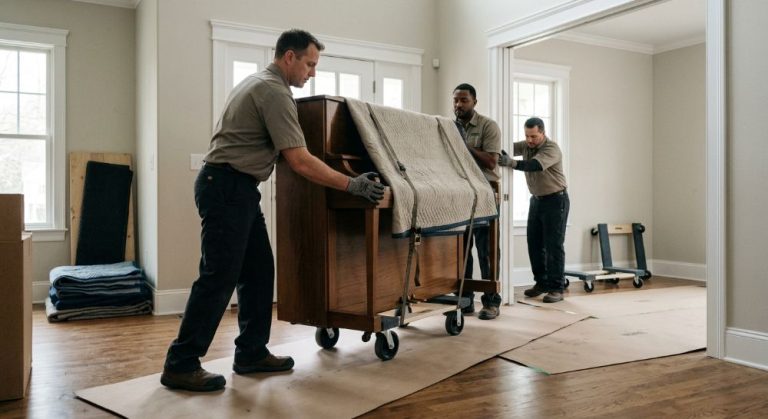
Measure all doorframes, hallways, and entryways beforehand. Clear away rugs, clutter, and floor mats. Wrap the piano body in heavy moving blankets, securing them tightly with packing tape or stretch film to prevent scuffs.
2. Load the Piano onto the Dolly:Proper lifting technique is required.
Position the dolly on level ground parallel to the center of the piano. Have two people lift one end of the piano slightly using their legs—not their backs—while a third person slides the dolly directly under the center of the base. Gently lower the piano onto the dolly.
3. Check Balance and Strap Down:Prevent tipping during turns.
Verify that the piano rests level and centered. If the weight biases heavily toward one side, adjust its position. Thread heavy-duty ratchet straps under the dolly and around the piano body, cinching them tight so the piano and dolly move as a single unit.
4. Roll Slowly and Guide:Keep hands on top at all times.
Have one person guide the direction from the front while two people push and steady the instrument from the back and sides. Move slowly, avoiding sudden stops, thresholds, or sharp turns.
How to Move a Grand Piano on a Skid Board
Grand pianos must be partially disassembled and moved on their side. Never try to roll a grand piano on its installed legs.
Warning on Stairs: Never attempt to roll a standard four-wheel dolly down steps or ramps. The wheels will slip out from underneath the load instantly, leading to runaway weight.
- Remove the Lyre and Lid: Unscrew the pedal lyre assembly and remove the top lid hinge pins to detach the lid. Wrap both separately in moving blankets.
- Position the Skid Board: Lay the padded skid board flat on the floor next to the straight (bass) side of the grand piano.
- Remove the First Leg: Use a piano jack or two strong helpers to lift the bass side of the piano slightly, unbolting the corner leg.
- Lower to the Board: Gently tilt the piano onto its straight side, landing the flat edge directly onto the padded face of the skid board.
- Remove Remaining Legs: Unbolt the remaining two legs once the piano’s weight rests securely on the board.
- Strap the Piano Body: Wrap the main body in heavy blankets. Thread ratchet straps through the E-track slots on the skid board and tighten them securely around the piano case.
- Mount onto a Four-Wheel Dolly: Center a heavy-duty four-wheel dolly under the middle of the loaded skid board to roll it.
Crucial Safety Rules
- Verify Dolly Weight Capacities: Standard residential utility dollies are often rated for only 200–400 lbs. Always verify the manufacturer’s weight rating on the dolly frame or wheels before loading a 600+ lb piano.
- Protect Floor Surfaces: Point-load weight from small dolly wheels can crush hardwood fibers or crack soft tiles. Lay down 1/4-inch Masonite sheets or heavy plywood along the move path on hardwood or plush carpeting.
Frequently Asked Questions
Can I move a piano by myself using a dolly?
No. Pianos are extremely top-heavy and difficult to balance. If a dolly catches on a doorway threshold or floor seam, one person cannot stop a falling 600-pound piano. You need a minimum of 2 to 3 adults for an upright and 3 to 4 adults for a grand piano. If you choose not to tackle it yourself, learn how to choose a mover or check how much movers cost for heavy items.
Can I rent a piano dolly or skid board?
Yes. Most local equipment rental yards, truck rental centers (such as U-Haul or Home Depot), and moving supply stores rent heavy-duty furniture dollies. Dedicated grand piano skid boards are typically available at specialty tool or equipment rental shops.
What is the main difference between a furniture dolly and a piano dolly?
Standard furniture dollies are built for lighter, broadly distributed furniture like sofas or dressers. Piano dollies feature heavy-duty hardwood or steel frames, higher-capacity solid rubber or pneumatic wheels, thicker protective padding, and built-in slots for securing ratchet straps.
How much does it cost to move a piano long-distance?
Long-distance piano transport costs depend on weight, distance, and whether you are moving an upright or a grand. For detailed pricing figures, check out how much it costs to move a piano across the country or look into how much it costs to move a grand piano across the country specifically.
About the Author