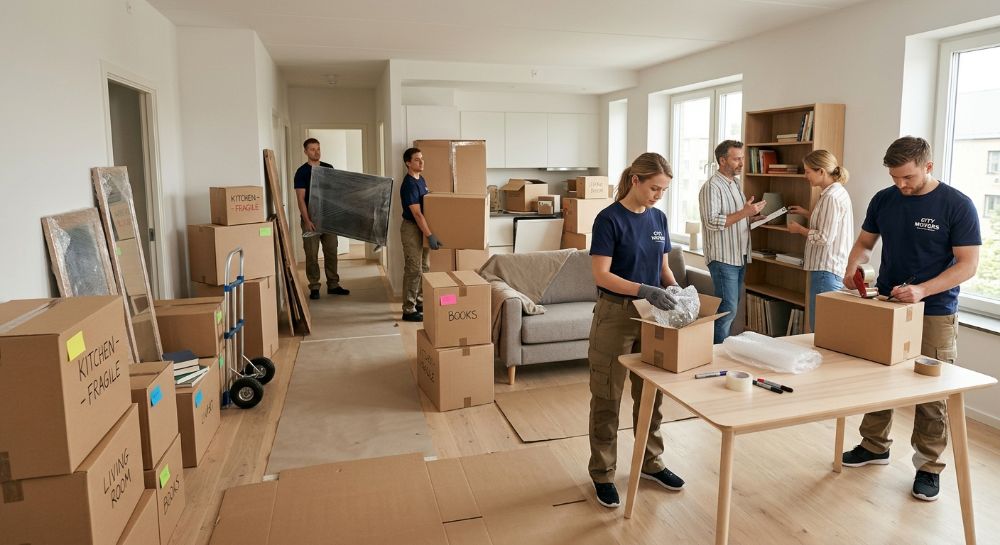
Packing for movers isn’t about tossing everything into boxes and hoping for the best. It’s about working room by room, protecting what’s fragile, and labeling everything so nothing gets lost between your old address and the new one. Start with storage spaces and out-of-season items weeks ahead, then save the kitchen and bathroom for last since you’ll use them until moving day itself.
What’s the Best Way to Start Packing for a Move?
The best way to start packing for a move is tackling low-traffic areas first: attics, basements, garages, guest rooms. These hold items you won’t touch for weeks, so there’s no downside to boxing them early. Save the kitchen and bathroom, the rooms you use daily, for the final 48 hours before the truck arrives.
How to Pack the Kitchen for Movers
The kitchen eats up more packing time than any other room in the house, sometimes 200 to 300 individual fragile items by one estimate, so start it a few days before your move date rather than the night before.
- Glassware and plates: wrap breakables individually in packing paper, pack plates vertically on their edges, and line box bottoms with towels for cushioning.
- Utensils: bundle 6 to 8 similar pieces together, wrap them, and place them in a small box.
- Small appliances: use original boxes when you still have them, and tape down loose cords so they don’t snag on anything during transit.
Packing Tips for Moving Living and Dining Rooms
Living and dining rooms mostly need protection for electronics and anything fragile that sits out in the open. Photograph your cable setup before unplugging the TV, so reconnecting it later takes minutes instead of guesswork. Wrap framed art and stand pieces on their edges in the box rather than laying them flat, with paper separating each frame. Lamps travel better with the bulbs removed and shades packed in their own box.
Moving House How to Pack Bedrooms
Bedrooms hold two things worth extra care: clothing and sleep. Leave hanging clothes on their hangers and slide them straight into wardrobe boxes. Fold or roll everyday items into suitcases or medium boxes, and keep shoes separate. For bedding, wrap mattresses in protective covers and disassemble bed frames, taping every screw and bracket into a labeled bag attached to the frame itself, so nothing goes missing.
Packing List for Moving Out: Bathroom and Laundry
Bathrooms are usually packed last because you need them until the final hours. Box up backup toiletries early, but discard anything leaking or hazardous long before moving day, since most movers won’t transport flammable or corrosive liquids anyway. Keep one “Open First” box with daily medications, a shower curtain, and one towel per person, separate from everything else.
Home Office, Garage, and Storage Essentials
Books get heavy fast, so use small boxes and either lay them flat or stand them upright with the spine facing the box wall. In the garage, drain gas and oil from power tools before they go anywhere near a moving truck, and pack away anything you don’t use weekly, leaving just a screwdriver or two out for last-minute fixes.
| Room | Pack Timing | Key Tip |
| Kitchen | 3–5 days before | Vertical plates, towel padding |
| Living/Dining | 1–2 weeks before | Photograph cables first |
| Bedrooms | 1 week before | Wardrobe boxes, labeled hardware bags |
| Bathroom | Final 48 hours | Keep an “Open First” box |
| Garage/Office | 2–3 weeks before | Small boxes for books, drain tools |
Distribute weight evenly across every box: heavy items belong in small boxes, light items in large ones. A box that’s too heavy to lift comfortably is a box that gets dropped. Label the top and all four sides with the destination room and a general contents list, using consistent moving labels so movers know at a glance where each box goes.
FAQ
What’s the hardest room to pack when moving?
The kitchen, consistently, due to the sheer number of fragile, oddly shaped, and heavy items packed into one space.
Do movers pack everything, or should I do it myself?
Full-service movers will pack for you, but many people handle at least the kitchen and bedrooms themselves to save on labor costs and keep an eye on fragile or sentimental pieces.
What should I not pack for movers to take?
Hazardous materials, perishables, live plants, and high-value documents or jewelry. Check the full list of items not to pack before your crew arrives.
How many boxes do I need for a move?
It varies by home size, but a good rule is one box per closet shelf worth of items. A guide on choosing the right box for each item helps you avoid over- or under-buying supplies.
Packing goes faster when you’re not moving things you don’t actually want anymore. Before you tape a single box shut, it’s worth working through a decluttering pass so you’re only packing what’s coming with you.
About the Author