Photo: RDNE Stock project, Pexels (Pexels License)
Should unframed art travel flat or rolled?
A canvas already stretched on its wooden support bars must always travel flat. Rolling a stretched canvas puts uneven pressure on the fabric and the ground layer, which can cause cracks in the paint film that may not appear for months. The stretcher itself also keeps the canvas under tension, and removing it for a move is a job for a conservator, not a packing crew.
Works on paper, unmounted prints and thin textiles can be rolled when the medium allows it. Charcoal, pastel, thick impasto or any paint layer that sits on the surface will flake if flexed, so those pieces travel flat between rigid boards. Ink drawings, pencil sketches and unframed prints on sound paper are generally safe to roll around a wide-diameter tube, never tighter than six inches across. The tube must be at least two inches longer than the widest sheet so the edges never touch the end caps.
Rolling saves space and reduces the chance of a puncture, but it introduces its own risk: a rolled work can be forgotten, stored too long and develop a permanent curl. Flat transport between sheets of acid-free foam board avoids that problem and is the safer default for any piece you cannot easily replace.
What packing materials do galleries use for unframed art?
Galleries build a protective envelope around each piece, starting with a non-abrasive layer that never sticks to the pigment. Nothing acidic, nothing textured, and no plastic film directly on the face of a painting or drawing.
Every material in the stack serves one job. Glassine stops moisture transfer without trapping condensation, while archival tissue fills shallow hollows so pressure spreads evenly. Rigid foam board gives a flat, puncture-resistant backing, and polyethylene sheeting goes on last as a dust and water shield.
- Acid-free glassine interleaving, placed ink-side out so no coating contacts the art surface.
- Unbuffered archival tissue for works on paper that are sensitive to alkaline reserves.
- Corner protectors made of clear polypropylene, slipped over the edges of foam board sandwiches.
- Closed-cell polyethylene foam board at least 3/16 inch thick, cut half an inch larger than the piece on all sides.
- Polyethylene sheeting as the outermost wrap, taped only to itself, never to the protective board.
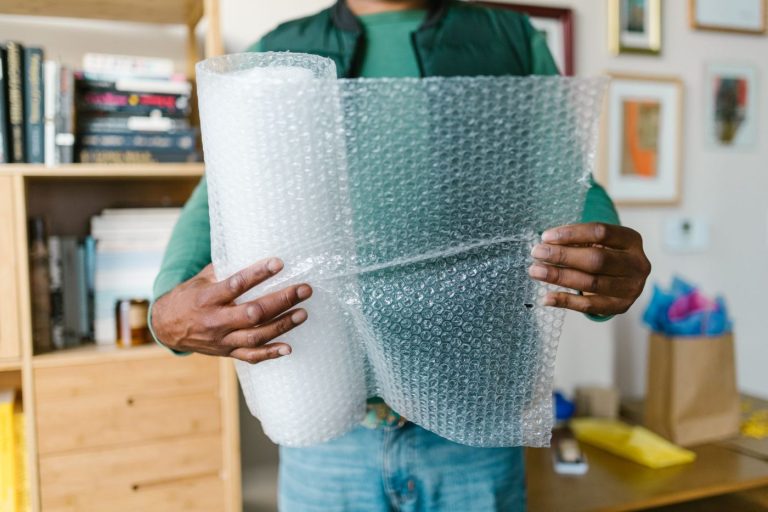
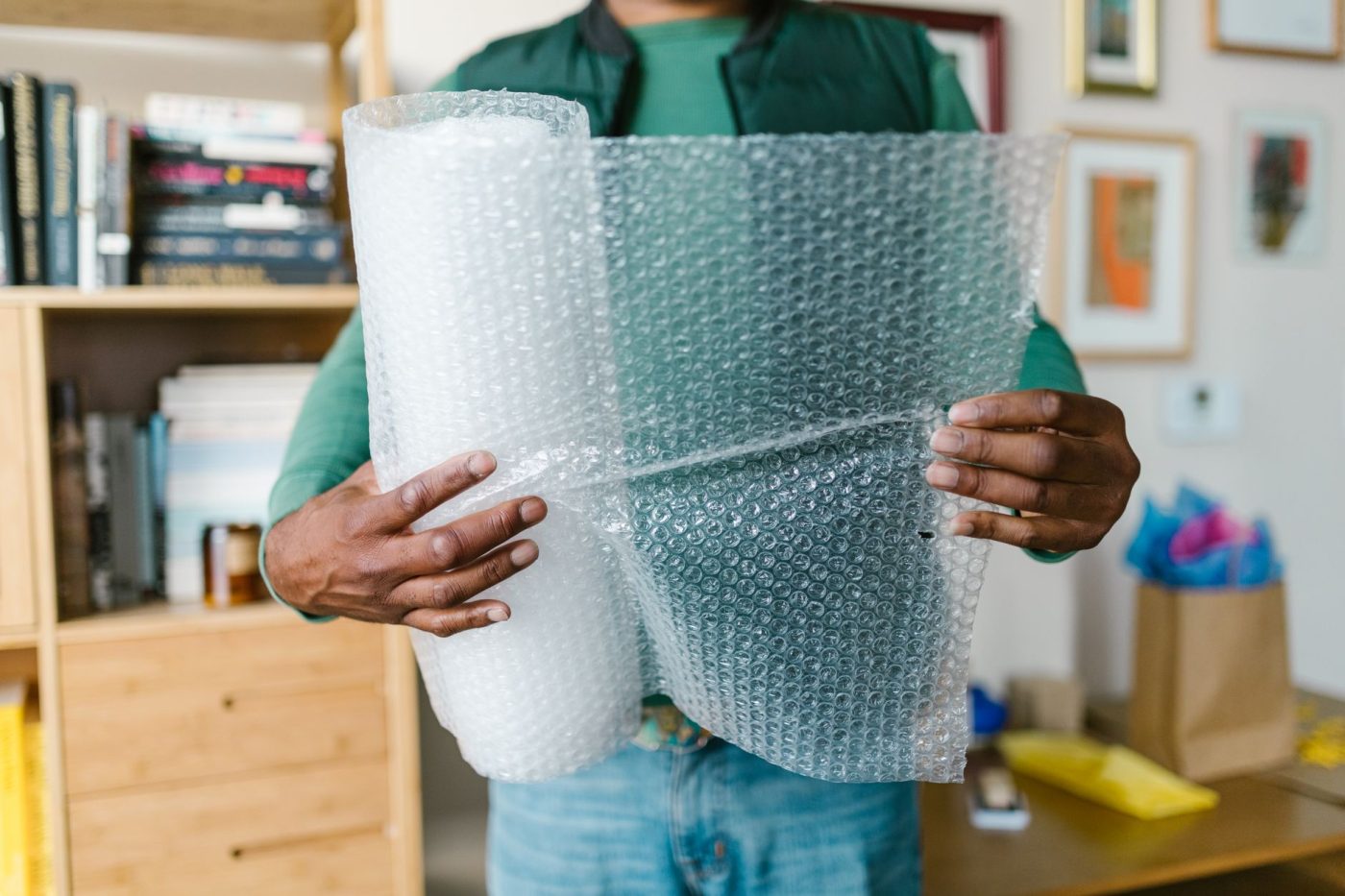
Standard plastic bubble wrap never touches artwork directly; its texture can imprint on soft media, and the trapped heat accelerates chemical breakdown. A mover should never wrap a pastel or charcoal piece straight in bubble.
How do you pack a stretched canvas without a frame?
A stretched canvas needs a rigid support that keeps pressure off the painted surface. The biggest risk is pressure on the front of the canvas, which can crack the paint or leave permanent impressions. Build every layer outward from the artwork so nothing touches the front.
Start by laying the canvas face up on a clean work surface. Cut a sheet of acid-free glassine paper slightly larger than the stretcher bars and tape it lightly to the back of the canvas so it wraps around the edges and covers the front without adhesive touching the paint. Galleries use glassine as the standard interleaving because it is smooth, moisture-resistant, and will not stick to oil or acrylic films even under pressure.
Next, place a rigid backing board behind the canvas. Use archival corrugated board, foam-centered board, or thin plywood cut at least one inch larger than the stretcher on all four sides. The oversized board creates a protective lip that absorbs side impacts before they reach the canvas edge. Secure the canvas to the backing board with linen tape or archival strapping across the back of the stretcher bars, never across the front.
Now add foam spacers or blocks of polyethylene foam around the perimeter of the backing board, on the same side as the canvas. The spacers must be thicker than the depth of the stretcher bars, so the front face of the canvas sits below the foam plane by at least a quarter inch. When you lower the package into an outer box, the foam spacers bear all the weight and keep the lid and walls away from the painted surface. Slide the assembly into a snug double-wall cardboard box, fill gaps with crumpled acid-free paper, and seal it. Label at least two faces of the box with "fragile" and "this side up".
How do you pack works on paper or unmounted prints?
Pack works on paper in a rigid sandwich that keeps the surface untouched and the sheet flat. Lay the print face up on a sheet of acid-free glassine or tissue, then place a second sheet on top so nothing adheres to the image. Slide the interleaved artwork between two sheets of archival foam board or corrugated plastic cut at least two inches larger than the paper on every side.
Tape the boards together along the edges with blue painter’s tape, keeping the tape on the backing boards only, never on the artwork or the interleaving. Label the outside with “fragile, do not bend” and an arrow showing the upright orientation. For a single print, slide this sandwich into a weatherproof plastic sleeve before placing it in a moving box filled with crumpled kraft paper to stop shifting.
- Use acid-free glassine interleaving on both sides of the artwork.
- Choose archival foam board or corrugated plastic as the rigid outer layers.
- Cut the boards at least two inches larger than the paper in every direction.
- Seal the package with painter’s tape applied only to the outer edges of the boards.
- Slip the finished sandwich into a waterproof sleeve and place it in a padded box.
A museum-grade portfolio case works better when you are moving ten or more unframed prints at once. The case keeps sheets separated with built-in sleeves and maintains even pressure across the stack. Carry the portfolio flat in the vehicle instead of loading it into the truck, where stacked boxes could shift against it.
What temperature and humidity limits should you keep during the move?
Art conservators recommend keeping the environment between 18°C and 24°C (65°F to 75°F) with relative humidity in the 40% to 55% range. Paper and canvas both expand and contract as moisture levels shift. A swing of more than 10% humidity within a few hours can cause the support to buckle and the paint or ink layer to crack, especially on older works that have already lost some elasticity.
A moving truck parked in direct sun can climb well past 35°C by midday, while an overnight stop in winter can drop the interior near freezing. The damage comes from the speed of the change rather than the absolute number. A canvas that cools too fast may slacken on its stretcher, then tighten abruptly when warmed, stressing the ground layer underneath the paint.
You can buffer conditions inside a truck with a few simple steps. Wrap each piece in acid-free tissue, then place it inside a sealed polyethylene bag with a sheet of archival foam board for rigidity. Add a small silica gel packet if the route passes through humid regions. Insulated art shipping blankets around the bundle slow temperature shifts. If the move takes more than eight hours, stop and check the cargo area at least once. Never leave packed art in a vehicle overnight without climate control.
Can you move unframed art in a personal vehicle?
You can move unframed art in a personal vehicle for short trips under an hour when you can control the cabin climate and pack each piece securely. A car or SUV works for local moves where the art stays in your sight and the route avoids rough roads. The main risk is not the vehicle itself but what you cannot control: sudden stops, temperature swings if you park in the sun, and the absence of a shock-absorbing suspension tuned for fragile cargo.
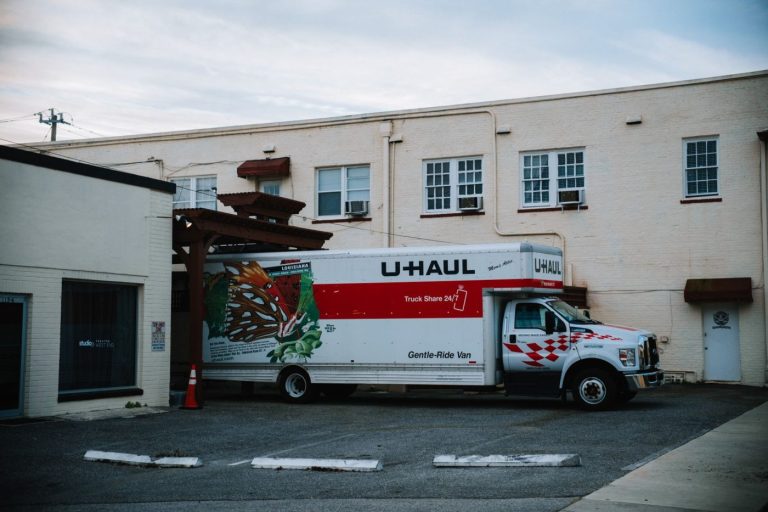
A professional art shuttle gives you what a personal vehicle cannot. Climate control holds steady at 18-22°C and 40-55% relative humidity from pickup to delivery, the cargo bay is insulated, and air-ride suspension cuts vibration that fatigues canvas fibers and paper over long distances. Movers also carry full insurance that covers art at declared value, something your auto policy almost certainly excludes. For a cross-state move or anything lasting more than a day, the cost of a climate-controlled art shuttle is the cost of not discovering cracked paint or cockled paper at the other end.
FAQ
Can I stack unframed canvases face to face?
No. Paint or varnish can stick under pressure and heat. Always separate canvases with a non-abrasive barrier and keep the painted surface from touching anything. If you must stack, use rigid spacers that contact only the stretcher bars, never the canvas.
Is bubble wrap safe to put directly on a painting?
No. The plastic can trap moisture and leave an imprint on the paint film. Wrap the artwork first in glassine or archival tissue, then add a layer of bubble wrap with the bubbles facing outward, away from the surface.
How long can unframed art stay in a moving truck?
It depends on the outside temperature and the truck. In summer, an unventilated truck can exceed 120 °F within hours and damage paint and paper. If the trip is longer than a few hours, use a climate-controlled vehicle or ship the collection separately with an art logistics service.
Do moving companies insure unframed art?
Standard moving valuation covers items by weight, not by appraised value, and often excludes fine art. Ask the mover for a declared-value rider or a separate fine-art floater through your insurer. Document every piece with dated photos before packing.
About the Author