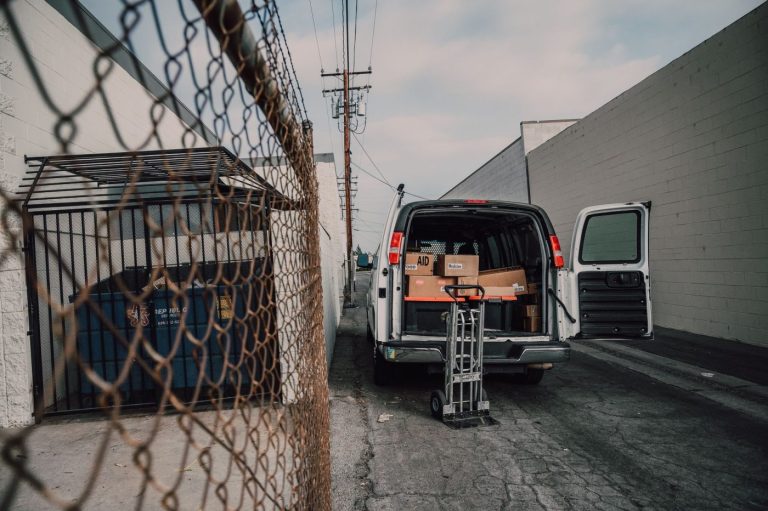

Photo: RDNE Stock project, Pexels (Pexels License)
What is the short answer on cost?
Moving containers usually cost less than full-service movers for long-distance relocations where you pack and load yourself. For a local move within the same city, a full-service crew often works out cheaper once you add up the rental period, delivery fees and the value of your own time spent on heavy lifting.
The longer the distance, the bigger the price gap. A container company charges you for transportation between cities and a monthly rental window, but not for labour by the hour. Full-service movers charge for both weight (or volume) and the crew's time from door to door. On a cross-country move, labour is the biggest cost. Cutting it out saves thousands of dollars.
For a local move, the opposite is true. Two or three movers can empty a home in half a day, but a container must be delivered, loaded over several days and collected, often with a minimum rental period you pay for anyway. When the distance is short and you pay mainly for time, full-service pricing is hard to beat.
How does a moving container service actually work?
A moving container service works in three steps. The company delivers an empty steel container to your driveway or the street outside your home and leaves it there for an agreed rental window. You load your belongings at your own pace, then call the provider to pick up the loaded unit and transport it either to your new address or to one of their secure storage hubs.
Most providers give you a set number of days to load the container on your property. If you need more time, you typically pay a small daily fee until you confirm the container is ready for collection. Once the unit arrives at the destination, the clock resets and you get another window to unload before the company retrieves the empty container.
Here is how it works:
- You book a container size that fits your household volume and schedule a drop-off date.
- The company places the container on a hard, level surface at your home, often on your driveway or directly on the street with a permit if local rules require one.
- You load the container yourself, securing furniture and boxes with straps or tie-downs inside the unit.
- You notify the provider when loading is complete and they collect the container with a specialised lift truck.
- The loaded container is transported to your new home or held at a company storage facility until you are ready for delivery.
- At the destination you unload on your own schedule within the second rental window, then arrange final pickup.
What do full-service movers include that containers do not?
Full-service movers handle every physical step of the move, from your front door to the new one. A container company drops a steel box at your curb and picks it up later. You do the packing, the lifting, and the driving.
With a full-service crew, you pay for labour, equipment and liability coverage as one bundled service. The crew typically handles:
- Packing materials: boxes, tape, paper and specialty wrap for furniture and electronics, brought by the crew and included in the estimate.
- Furniture disassembly and reassembly: the team takes apart beds, tables and large shelving units, then puts them back together at the destination.
- Loading the truck: the crew carries every item out of your home and packs the truck securely with straps and moving blankets.
- Driving to the destination: a company driver transports your belongings while you fly, drive separately or wait at the new home.
- Basic valuation coverage: released-value protection is included in the base rate, covering 60 cents per pound per item under standard US and Canadian tariffs.
In a container move you supply all packing materials yourself, load the container with your own labor or hire help separately, and arrange your own transport to the destination. If something is damaged because you packed it incorrectly or the load shifted during transit, the container company’s liability is limited to the structural integrity of the box itself. You carry the physical work and the risk of poor packing.
Which option makes more sense for a long-distance move?
For a cross-country or cross-border move, a container often costs less because you do not pay for a driver, fuel, or lodging over several days. Transit time, however, works the other way. A container must be collected, transferred at a hub, and delivered on a shared schedule, which can stretch a coast-to-coast move to 10 to 21 days. A dedicated truck with a single crew typically covers the same distance in 3 to 7 days.
The risk profile also shifts with distance. When a single crew loads your home and drives straight to the destination, your belongings are handled once and ride undisturbed. With a container, the box itself may be lifted, stacked, and transferred between depots, and your items sit inside through multiple temperature and humidity swings. The longer the journey, the more those swings matter for wood furniture, electronics, and musical instruments.
If your schedule is flexible and you want to keep the price low, a container makes practical sense for a long-distance move. When you need a firm delivery window or you are moving items that cannot tolerate a week or more in an unheated steel box, a full-service crew on a dedicated truck is the safer choice.
Are there hidden costs with container moves I should plan for?
A container quote often covers only the box and the transport. Costs for permits, help with loading and keeping the container longer than planned can add up quickly if you do not ask about them upfront.
Many cities and homeowners’ associations require a street-occupancy permit before you park a container on a public road or in a shared lot. The container company rarely arranges this for you, so you need to check local rules and pay the fee yourself. In a private driveway, the risk is damage to the surface: a loaded steel box can crack asphalt or pavers, and repair costs fall on you.
If you cannot load everything in the initial rental window, you will pay a monthly extension fee. Heavy items such as pianos, safes or large workshop tools often require extra hands you had not budgeted for. Hiring local labor for a few hours is common, and the rate depends on where you live and how much you lift. Before you book, run through this checklist with the container company:
- Is the street permit included in my quote, or do I obtain it myself?
- What is the monthly fee if I need the container longer than the standard rental period?
- Does your insurance cover damage to my driveway or the street while the container is on site?
- Will you connect me with local loading help, or do I hire a crew independently?
- How many days before move day do you deliver the container, and is early delivery free?
How do I vet a mover or a container company and avoid scams?
Vetting starts the same way for both service types: you verify the company’s legal identity before you share your inventory or pay anything. For any interstate move within the United States, the mover or container provider must have a USDOT number and a motor carrier (MC) number issued by the Federal Motor Carrier Safety Administration. You can look up both numbers for free on the FMCSA website and confirm the company’s operating authority, insurance status and complaint history in under two minutes.
Read reviews on at least three independent platforms, not only the testimonials posted on the company’s own site. Look for patterns rather than one-off complaints. A cluster of recent reviews mentioning the same problem, such as a delivery window that kept slipping or a final bill far above the estimate, tells you more than an average star rating. Cross-border moves between the US and Canada require a carrier with CBSA-bonded status and familiarity with the clearance process, so ask for a written outline of their customs procedure early in the conversation.
Certain red flags should stop you immediately, regardless of how attractive the quote looks.
- A company that demands a large upfront deposit, typically more than 20% of the estimate, before the move date is a known warning sign. Reputable movers and container providers bill the majority after the service is performed.
- A quote given over the phone or by email without a visual survey of your home, either in person or by video call, is not binding and often leads to a higher final charge.
- No verifiable physical address on the website, only a PO box or a virtual office, means you have no way to reach the company if a dispute arises.
- A company that operates under several different names and DOT numbers within a short period may be trying to outrun a poor safety record.
- Refusal to provide a written estimate that separates transportation charges from accessorial fees such as packing, stair carries or long carries is a tactic used to hide the true cost.
- High-pressure sales language that pushes you to book today to lock in a discount is a tactic, not a genuine offer.
FAQ
Can I use a moving container for a cross-border move between the US and Canada?
Yes, several container companies serve US-Canada routes. You will need to prepare a detailed inventory for customs and may pay a brokerage fee. Transit times are longer than a dedicated truck, so ask the provider for a realistic delivery window before you commit.
Do full-service movers offer storage if my new home is not ready?
Most full-service moving companies can hold your shipment in their warehouse for days or weeks. You typically pay a storage-in-transit fee based on weight and duration. Confirm the warehouse is climate-controlled if you are storing furniture, electronics, or artwork.
What if something gets damaged in a container versus with a mover?
Full-service movers generally provide basic valuation coverage at no extra charge, with the option to purchase full replacement coverage. Container companies usually offer third-party insurance or a per-pound liability limit. Read the coverage terms before loading day, because the claims process differs significantly between the two.
How far in advance should I book either service?
For a summer move, book four to six weeks ahead for either option. Container availability tightens quickly in peak months, and reputable full-service crews fill their schedules early. A last-minute booking often means paying a premium or settling for a company with weaker reviews.
About the Author